Is your HVAC not blowing cold air? If your HVAC problem does not improve after checking the thermostat, air filter, vents, and breaker, it is time to call an HVAC technician. You should also schedule air conditioning repair if you notice ice on the system, repeated breaker trips, water around the indoor unit, burning smells, or unusual noises. In Villa Rica, GA, losing air conditioning can quickly make the house uncomfortable, especially during the long stretch of hot, humid weather that typically runs through the summer and into early fall.
Not every cooling problem means your air conditioner needs a major repair. Sometimes a thermostat setting or overdue filter change is all that stands between you and a comfortable house. The important part is knowing what you can safely check yourself and when continuing to run the system could make matters worse.
Before calling for service, spend a few minutes checking the basics. You do not need tools, and you should not remove equipment panels or touch wiring.
Start at the thermostat. Make sure it is switched to "cool" and set below the current indoor temperature. If the fan is set to "on," change it to "auto." An "on" setting keeps the blower running between cooling cycles, so you may feel room-temperature air coming from the vents even when the AC is not actively cooling. If the thermostat itself is no longer responding or controlling the system correctly, it may need a new professional thermostat installation.
Next, look at the air filter. A filter packed with dust restricts the amount of air moving through the system. That can reduce cooling and, in some cases, contribute to a frozen evaporator coil. Replace a dirty filter with the correct size and type for your equipment. If accessing or changing the filter is difficult, professional air filter replacement service is another option.
Take a quick walk through the house, too. Make sure supply vents are open and not covered by furniture, rugs, curtains, or boxes. Finally, look at your electrical panel. If the AC breaker has tripped, you can reset it once. If it trips again, leave it off and call a technician rather than repeatedly resetting it.
This is one of the more frustrating AC problems because the system sounds like it is working. You can hear the blower and feel air coming from the vents, yet the temperature inside keeps climbing.
The indoor fan can run even when another part of the cooling system is not doing its job. That is why airflow alone does not necessarily mean the AC is working properly.
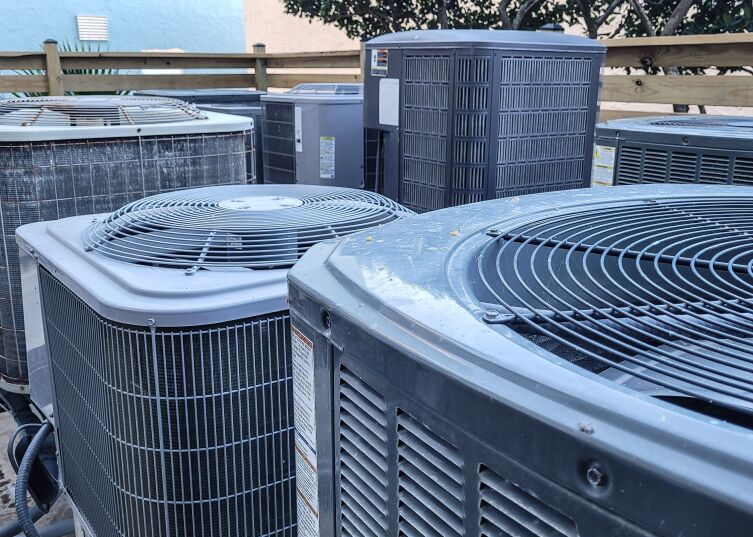
Take a look at the outdoor condenser while the AC is supposed to be running. If the indoor blower is on but the outdoor unit is silent, there could be an electrical or mechanical problem.
Possible causes include:
These are not good DIY projects. HVAC equipment contains high-voltage components, and some electrical parts can retain a charge even after power has been shut off.
Ice inside an air conditioner is not a sign that it is working extra hard to keep the house cold. It usually means something has gone wrong. The evaporator coil needs enough warm air moving across it to operate properly. Restricted airflow or certain refrigerant problems can cause the coil temperature to drop too low, allowing moisture to freeze on its surface.
You might notice weak airflow, warm air from the vents, ice around the refrigerant line, or water near the indoor equipment after the ice begins melting. If you see ice, turn off the cooling function. Simply removing the visible ice does not solve whatever caused the coil to freeze in the first place.
Refrigerant moves heat from inside your Villa Rica home to the outdoors. It circulates through a closed system and should not normally need to be "topped off" as part of routine maintenance. Low refrigerant can indicate a leak.
Symptoms can include poor cooling, unusually long AC cycles, ice on the refrigerant line or evaporator coil, and hissing or bubbling sounds. A suspected leak calls for professional refrigerant leak detection. A technician can inspect the system, determine where refrigerant is escaping, and recommend the appropriate repair instead of simply adding more refrigerant without addressing the cause.
There are times when shutting the system down and calling for service is better than trying another round of troubleshooting.
A burning or electrical smell is one of them. Turn off the equipment if you notice an unusual burning odor coming from the HVAC system or vents. Overheated motors, damaged wiring, and failing electrical components are among the possible causes.
Repeated breaker trips deserve the same caution. A breaker is designed to interrupt power when there is an electrical problem or excessive current. Continually resetting it does not fix the reason it is tripping.
Electrical damage can sometimes follow storms, outages, and voltage spikes as well. Homeowners concerned about protecting sensitive HVAC components can ask whether a HVAC surge protector installation makes sense for their system.
Pay attention to new noises as well. An air conditioner is never completely silent, but you probably know the normal hums and clicks of your own system. A sudden grinding, screeching, banging, or persistent buzzing sound is different.
Call for service if you notice:
These symptoms do not all point to the same repair, which is exactly why a proper diagnosis matters.
Villa Rica summers put air conditioners through long periods of high demand. Hot temperatures combined with Georgia humidity mean your cooling system may spend much of the afternoon running.
An air conditioner may run longer during a particularly hot day without anything being wrong. The concern is when the system runs for hours but cannot maintain a reasonable indoor temperature.
For example, if your home normally stays comfortable at 74 degrees but suddenly climbs toward 80 while the AC runs continuously, something may be limiting the system's cooling capacity.
Do not try to solve the problem by dropping the thermostat to 60 degrees. A much lower thermostat setting does not make a standard residential AC blow colder air. It simply tells the system to keep running.
Dirty outdoor coils, clogged filters, air leaks, poor insulation, duct problems, and aging equipment can all affect how well a home holds a comfortable temperature. A system that seemed fine during mild spring weather may reveal an underlying problem once summer temperatures arrive.
When the simple fixes do not work, a technician can test parts of the system that homeowners cannot easily evaluate by looking at them.
The visit may include checking the thermostat, temperature difference between supply and return air, blower operation, electrical components, coils, condensate drainage, refrigerant pressures, condenser fan, and compressor.
Airflow matters, too. If one area of your Villa Rica home has always been warmer than the rest, the issue may involve the home's ductwork rather than the air conditioner itself. Leaks, damaged ducts, poor connections, or airflow restrictions can prevent cooled air from reaching certain rooms.
The goal is to identify why the system is not cooling before replacing parts. Several AC problems produce nearly identical symptoms. Weak airflow, for instance, could come from a dirty filter, blower problem, frozen coil, or duct restriction.
Air conditioners remove moisture from indoor air as they cool your home. That moisture normally collects and leaves through the condensate drain. Water around the indoor HVAC unit means that process is not happening as it should.
A clogged condensate drain is one possibility. A damaged drain pan or frozen evaporator coil can also leave water around the equipment.
It may be tempting to mop up the water and see if it comes back, but moisture can damage flooring, drywall, ceilings, and nearby belongings. If you cannot identify a simple cause, have the system checked.
This can be especially noticeable during humid Georgia summers, when an AC may remove a considerable amount of moisture from indoor air during normal operation.
Warm air coming from the vents does not automatically mean it is time for a new air conditioner.
A relatively new system with one failed component may be a straightforward repair. An older unit with a history of breakdowns presents a different decision.
Age is only part of the equation. Consider how often the system has needed repairs, whether it still cools the house evenly, how long it runs, and the cost of the current repair.
Replacement may make more sense when an older AC needs an expensive major component, particularly if other parts are showing signs of wear. On the other hand, replacing an entire HVAC system because of a minor electrical part would rarely make financial sense.
A diagnosis gives you the information needed to compare those options instead of guessing based on the symptom alone.
Air conditioners eventually need repairs, but homeowners can reduce some common airflow and performance problems with basic upkeep.
Check the filter regularly during cooling season rather than waiting until the house feels warm. Homes with pets, renovation dust, or other sources of airborne debris may need filter changes more often.
Keep the area around the outdoor condenser clear as well. Leaves, weeds, grass clippings, and other debris can collect around the equipment. Give the unit enough open space for air to move freely.
Professional air conditioning maintenance can address parts of the system that are harder for a homeowner to evaluate. A maintenance visit can also uncover worn components or declining performance before the AC stops cooling on one of Villa Rica's hottest days.
It is worth paying attention to small changes between service visits, too. An AC that suddenly runs much longer, sounds different, or leaves certain rooms warmer than usual may be giving you an early warning before it stops cooling altogether.
There is nothing wrong with checking a thermostat, changing a filter, opening a blocked vent, or looking at the breaker. Those quick checks can sometimes save you a service call.
Once the problem involves electrical testing, refrigerant, frozen coils, internal motors, or the compressor, put the tools down. Guessing at HVAC repairs can damage equipment and create safety risks.
You also do not have to wait until the house is completely hot. Gradual changes matter. Longer cooling cycles, weaker airflow, rising energy use, uneven temperatures, and an AC that seems to struggle more than it did last summer can all justify an inspection.
If the easy checks do not bring the cold air back, McCoy & Son Heating and Cooling can help find the source of the problem. Whether your Villa Rica AC has stopped cooling altogether or simply cannot keep up with the Georgia heat, our technicians can inspect the equipment and recommend the repair it needs.
Contact McCoy & Son Heating and Cooling today to schedule HVAC service in Villa Rica, GA.