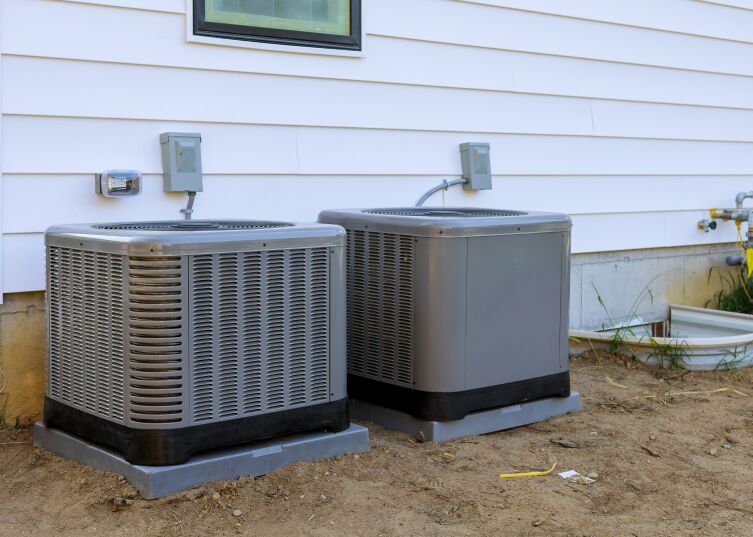
If you are wondering, "How do you clean outside air conditioner units?", start by shutting off power to the AC, clearing leaves and grass from around the condenser, removing loose debris, and gently rinsing dirt from the coils with a garden hose. Skip the pressure washer, since the force can bend the thin metal fins.
For homeowners in Villa Rica, GA, checking the outdoor unit is especially useful during cooling season when heat, pollen, grass clippings, and summer storms can leave the condenser looking pretty rough.
The outside air conditioning unit does a lot of work when your AC is running. Heat pulled from inside your house eventually has to go somewhere, and the condenser helps release it outdoors. When the sides of the unit are covered in dirt or surrounded by overgrown plants, moving that heat becomes more difficult.
You do not need to scrub the condenser every weekend. A quick look now and then, especially during a hot Georgia summer, can tell you a lot about whether it needs attention.
An outdoor condenser is built to sit outside, so a little dirt is normal. The trouble starts when enough debris collects to block airflow through the coil.
Villa Rica homeowners can deal with several sources of buildup throughout the year. Spring pollen can coat outdoor surfaces in yellow dust. Grass clippings can stick to the condenser after mowing. Summer storms blow leaves, twigs, and dirt around the yard, while fall brings another round of leaves.
Landscaping can cause problems too. A shrub that looked comfortably far from the condenser a year ago may eventually grow right up against it.
The goal is not to keep the unit perfectly clean. It is to keep air moving freely through and around it.
Before cleaning anything, turn the air conditioner off at the thermostat and disconnect power to the outdoor unit according to the manufacturer's directions. Outdoor AC equipment contains electrical parts, and the fan can start while the system is running.
Once the power is safely off, take a look around the condenser before reaching for the hose.
Remove leaves, sticks, weeds, and other debris from the ground surrounding the condenser. Trim back plants that are crowding the cabinet so they are not blocking airflow.
Pay particular attention to grass clippings. If the unit sits close to the lawn, clippings from repeated mowing can gradually collect against the sides.
A few minutes of cleanup may be all the unit needs if the coils themselves are not particularly dirty.
Look through the protective exterior and check for visible buildup. You might find dried grass, pollen, leaves, small seeds, or even spiderwebs caught against the coil.
Loose material can usually be removed carefully. Do not scrape or aggressively brush the metal fins. They are much thinner and easier to bend than the condenser's exterior cabinet makes them look.
Bent fins can restrict airflow, which defeats the purpose of cleaning the unit in the first place.
A regular garden hose can be useful for removing light dirt from accessible areas of the condenser coils - though it's worth knowing how much water an AC unit handles before you start. Keep the water pressure gentle.
Do not use a pressure washer.
It may seem like the quickest way to get the coils clean, but concentrated water pressure can flatten or bend the fins. If dirt is packed deep into the coil or cannot be removed with gentle cleaning, that is a good point to leave the job to an HVAC technician.
You should also avoid spraying electrical components or taking panels apart unless you know how to work safely around HVAC equipment.
Sometimes you can see that the condenser needs cleaning. Other times, the first clue shows up inside the house.
Here are five things worth paying attention to.
This is the easiest one to spot. Walk outside and look at the condenser. Can you clearly see the coil area, or does it have a noticeable coating of debris?
Grass clippings are a common culprit, particularly when the AC unit sits near an area that gets mowed frequently. Pollen can create another layer of buildup during spring in Villa Rica and throughout West Georgia.
A little dust is not a crisis. Thick buildup that covers large portions of the coil is different because it can interfere with airflow.
This is also why it helps to take a quick look at the condenser after yard work rather than waiting until the house stops cooling properly.
Georgia summers are demanding on air conditioners. Longer cooling cycles during an extremely hot afternoon are not necessarily unusual. What you want to notice is a change.
If your AC used to cool the house comfortably but now seems to run almost constantly without reaching the thermostat setting, check the condenser.
A dirty outdoor coil can make it harder for the system to release heat. That can mean longer run times and less effective cooling.
Of course, dirt is only one possible cause. Long cycles can also point to a dirty indoor air filter, duct problems, refrigerant issues, thermostat trouble, aging equipment, or another HVAC problem.
If the outdoor unit is clean and the AC still cannot keep up, the problem needs a closer look.
You probably know how your home normally feels when the air conditioner is working well.
Maybe the upstairs suddenly feels warmer. Perhaps the house takes much longer to cool in the evening. You might notice that the thermostat says 74 degrees, but the indoor temperature seems stuck several degrees higher.
Start with the simple things. Check your air filter, thermostat, vents, and outdoor condenser.
If the condenser is packed with debris or surrounded by weeds, cleaning the area may help restore the airflow it needs.
If everything looks clean but cooling has still declined, do not assume the outdoor unit simply needs more washing. Poor cooling can have many causes that are not visible from the yard.
Higher electric bills are part of running an AC through a Villa Rica summer, especially during stretches of high temperatures. What deserves attention is an increase that seems out of line with your normal usage.
Compare your electricity use with similar periods from previous years when possible. If your habits and thermostat settings have not changed much but the system seems to be using considerably more energy, it may be running longer than it used to.
Dirty condenser coils are one possible reason. When airflow and heat transfer are restricted, the cooling system may have to spend more time running to reach the same indoor temperature.
An unexplained jump in energy use can also be a reason to have the full system checked, particularly if you have noticed changes in cooling at the same time.
Outdoor AC units are not quiet. A steady hum and fan noise are part of normal operation. You should still become suspicious when the usual sounds change.
Rattling could be something as simple as a loose twig or debris. Buzzing, grinding, clicking, hissing, or unusually loud operation could point to something else entirely.
Never reach into a running condenser to investigate a noise. Turn the system off before looking for obvious debris around accessible areas.
If nothing is visibly caught in the unit or the noise comes back when you turn the AC on again, schedule service instead of repeatedly running it to see what happens.
There is no need to follow an overly complicated cleaning calendar. Instead, make a habit of looking at the condenser when conditions around your Villa Rica property are likely to make it dirty.
Good times to check include:
Most of these checks take less than a minute. You are simply looking for anything that is obviously blocking the sides or crowding the unit.
It is much easier to pull away a handful of leaves now than discover a thick layer of debris after the AC has been struggling through weeks of hot weather.
More cleaning power is not necessarily better when dealing with an air conditioner. Pressure washing is one of the biggest things to avoid because it can damage condenser fins. Aggressive scrubbing can cause similar problems.
Household cleaners are another questionable shortcut. Unless a cleaner is specifically appropriate for your equipment and used according to the manufacturer's directions, do not assume that a strong chemical will make the job better.
You also should not remove electrical covers or attempt repairs simply because you already have the power turned off.
Basic yard cleanup and gentle exterior cleaning are reasonable homeowner maintenance. HVAC repairs, refrigerant work, damaged components, and deeper mechanical problems are a different job.
Yes. The condenser needs airflow to release heat outdoors. Covering the coil with debris is a little like putting an unnecessary barrier between the equipment and the surrounding air.
The result may show up as longer cooling cycles, trouble maintaining the thermostat setting, or declining efficiency. That does not mean every AC problem is caused by a dirty outdoor unit. In fact, that is an important distinction.
If you clear and gently clean the condenser and your home still will not cool properly, continuing to clean it is unlikely to fix the underlying problem. At that point, the issue could involve another part of the cooling system.
There are some AC problems you can spot from across the yard. Others require testing and hands-on inspection.
Call an HVAC professional if you notice ice forming on the refrigerant lines, the outdoor fan is not running properly, the system repeatedly starts and stops, the AC is blowing warm air, or you hear persistent mechanical noises.
The same applies when your home remains uncomfortable after you have handled basic maintenance.
Professional AC maintenance also covers much more than washing the condenser. A technician can check how the system is operating, inspect components for wear, look for electrical concerns, and determine whether another issue is making the equipment work harder than it should.
Outdoor AC maintenance does not have to become another big weekend project. Keep the condenser clear, check it after mowing and storms, and gently clean away ordinary dirt when necessary. Most importantly, pay attention when the system starts behaving differently.
In Villa Rica, an air conditioner may spend a large part of the year working to keep the house comfortable. Taking care of small maintenance issues before the hottest days arrive can save you from discovering a problem when you need the AC most.
If your outdoor unit is dirty, making unusual noises, running constantly, or simply not cooling your Villa Rica home the way it should, contact McCoy & Son Heating and Cooling to schedule AC service. A professional inspection can pinpoint what is going on and help get your system back to cooling your home properly.