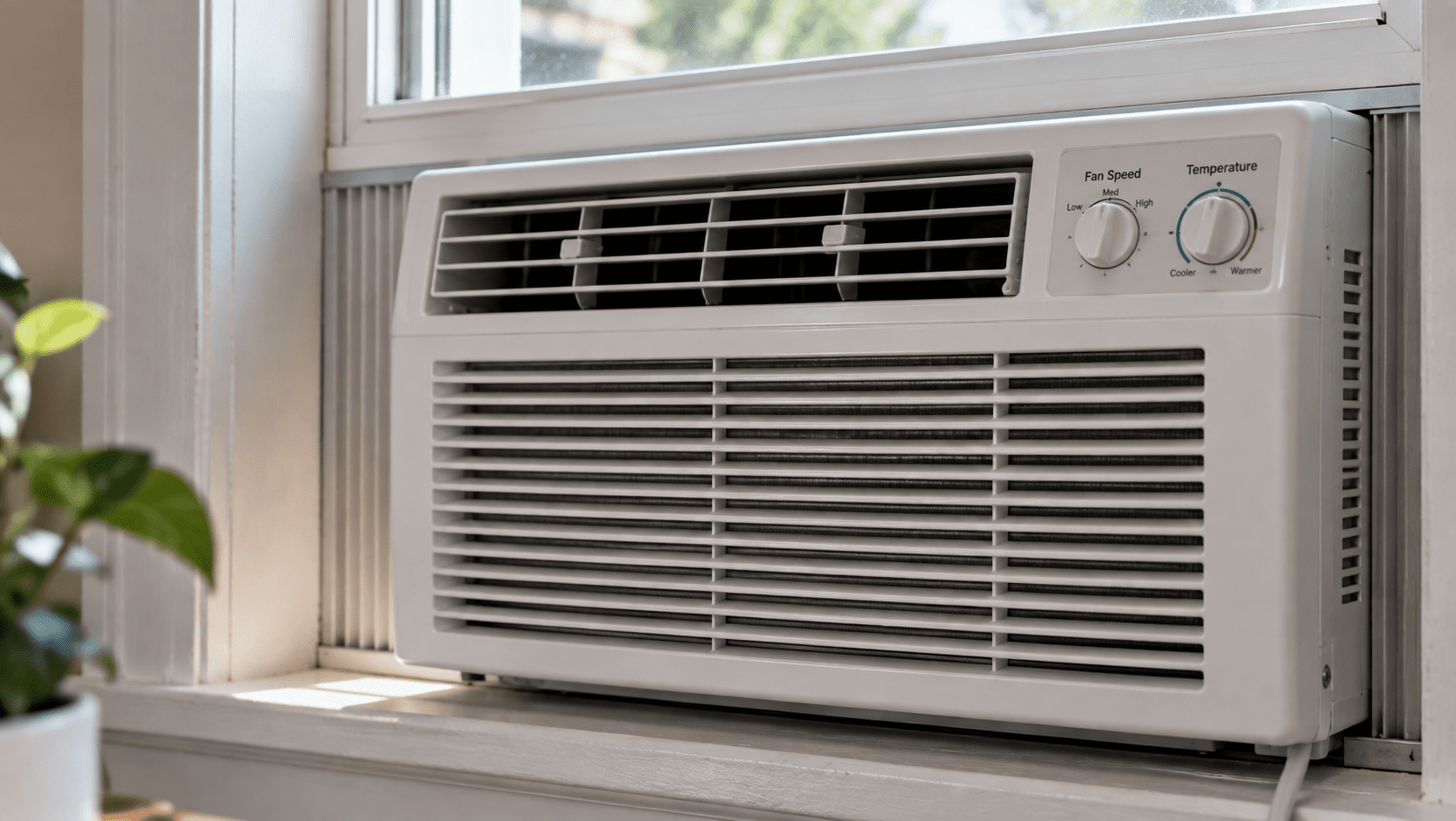
If you’re wondering can window AC units get wet, the answer is yes, they can. Window air conditioners are made to withstand normal rain on the portion that sits outdoors. A summer shower in Villa Rica, GA, generally isn't a reason to shut off your AC or rush outside to cover it. In fact, covering an AC unit when it needs airflow can create problems of its own. Water becomes a concern when it gets into electrical components, leaks into your house, collects because the unit isn't draining correctly, or rises high enough to partially submerge the AC.
That distinction matters in West Georgia, where hot, humid summer weather can bring afternoon thunderstorms and periods of heavy rain. Your window unit doesn't need to stay completely dry. It does need to be installed correctly and able to drain water where it belongs.
Normal rainfall should not hurt a properly installed window air conditioner. Manufacturers know that part of the equipment will remain outdoors, so the exterior cabinet and internal layout are designed with exposure to weather in mind.
The AC also deals with water every time it cools a humid room. As warm indoor air moves across the cold evaporator coil, moisture condenses on the coil. The air conditioner collects and directs that moisture away from the living space.
Rain hitting the back or sides of the outdoor portion is therefore much different from water reaching the electrical controls or outlet inside your home.
You generally don't need to cover your window AC because rain is coming. Placing a cover over an operating air conditioner can restrict the airflow the unit needs to release heat.
Villa Rica thunderstorms can bring heavier rain and strong winds, however. Wind-driven rain may reach areas that stay relatively dry during an ordinary shower. This is more likely to create trouble if the unit isn't sealed well around the window or has existing damage.
After a particularly strong storm, check the indoor portion of the unit and the window sill for water.
A rain-soaked exterior cabinet isn't usually concerning. Water dripping down your interior wall is.
If you see water inside, don't immediately assume rain has traveled straight through the AC. Several problems can cause moisture to end up on the wrong side of the window.
These include:
Even a small leak deserves attention if it happens repeatedly. Water can eventually damage the window sill, drywall, paint, flooring, and trim.
A window AC that gets rained on and one that has been partially submerged are two very different situations.
If rising water reaches the unit during severe weather, don't turn it back on simply because the outside looks dry afterward. Water may have reached wiring, motors, controls, or other electrical parts. Floodwater can also leave dirt and other contaminants behind.
Keep a flooded unit off until you know whether it is safe to operate.
Not every drip means rainwater has entered the system. Air conditioners pull humidity from indoor air as they cool. Villa Rica summers give AC equipment plenty of humidity to deal with, so window units may produce a noticeable amount of condensation on muggy days.
That water needs somewhere to go. Most window units are installed so condensation remains toward the outdoor portion and drains or is otherwise managed according to the manufacturer's design. If the unit isn't positioned correctly, water can travel toward the room instead.
Debris can cause trouble, too. Dirt, leaves, insects, and other material can collect around the outside of the AC and interfere with drainage. Regular cleaning can help prevent buildup.
Similar principles apply when cleaning outside air conditioner units, where keeping debris away from important components helps the system operate as intended.
If the unit has worked without leaking for months and suddenly starts dripping indoors, check for drainage issues before assuming the rain itself damaged the AC.
It might seem logical to drill a hole in the bottom of a window AC when you notice standing water, but that's not always a good idea.
Some window air conditioners intentionally retain a small amount of condensation. The fan may use that water as part of the unit's operation.
Follow the manufacturer's drainage instructions for your particular model rather than modifying the cabinet on your own.
Pay attention to how your AC behaves after unusually heavy rain or another source of significant water exposure.
A problem may show up as:
Repeated breaker trips are particularly important. Don't continue resetting the breaker and trying the AC again. The breaker is responding to a problem that needs to be identified.
Sounds can offer clues as well. Some AC noises are harmless, while others can point to loose, worn, or failing components. If you're hearing something new, learning why an HVAC system is making noise can help you recognize when a sound deserves attention.
The same goes for odors. A musty smell may be connected to excess moisture or buildup, while a burning smell could indicate an electrical problem. There are several possible reasons your AC unit may smell, and a new odor after heavy water exposure shouldn't be ignored.
Villa Rica can see thunderstorms throughout the warmer months, and not every storm calls for an AC inspection. If your window unit was exposed only to rain and continues operating normally, there's generally little reason for concern.
After more severe weather, a quick visual check is worthwhile.
Look at the window sill, wall, and floor around the indoor portion of the AC. Check for damp spots or water trails. Make sure the unit hasn't shifted in the window and that its side panels are still secure.
When it's safe to look outside, check for branches or other debris that may have hit the unit. The plug and outlet should remain completely dry. If water has reached either one, don't touch or operate the equipment while the area is wet.
For ordinary rain, you generally can. A window air conditioner that is properly installed and in good condition is designed to tolerate typical outdoor weather while operating. Severe storms introduce other concerns.
Lightning, power fluctuations, strong winds, falling limbs, and flooding can all affect electrical equipment. Storm-related power problems can affect central cooling systems as well. Homeowners concerned about voltage spikes during severe weather may want to consider HVAC surge protector installation for their home's heating and cooling equipment.
Don't restart a window unit when water has reached its plug, outlet, controls, or other indoor electrical parts.
You can't prevent rain from touching a window AC, and there's no need to try. It's more useful to prevent water from finding a path into your house.
Check the fit of the unit occasionally, particularly after storms. Side panels should remain secure, and there shouldn't be obvious openings around the installation.
Look at the condition of the window, too. Old caulk, deteriorating seals, damaged trim, or problems with the window frame can cause leaks that appear to come from the AC.
Keep leaves and other debris away from the outdoor portion so water can drain as intended. If you remove and reinstall the unit seasonally, follow its installation instructions each time rather than assuming the previous angle or position was correct.
For homes with central cooling, regular air conditioning maintenance can also help catch drainage, airflow, and performance issues before they lead to larger problems.
A little rainwater on the outside isn't a reason for an HVAC service call. Changes in the way the air conditioner operates are more telling.
Have the unit checked if it stops cooling after a storm, repeatedly trips a breaker, develops an electrical smell, makes a new unusual noise, or continues leaking into your room. Significant flood exposure is also a reason to have the equipment evaluated before attempting to use it again.
Sometimes the problem isn't water damage at all. A leaking window unit could have a drainage problem, while poor cooling may be related to dirty components, restricted airflow, or another mechanical issue that happened to become noticeable around the same time as a storm.
Avoid taking apart electrical components or attempting complicated repairs if you aren't sure what caused the problem. DIY mistakes can turn a relatively simple issue into a larger repair, which is why knowing the common air conditioning repair mistakes can save some frustration.
Getting caught in a Villa Rica rainstorm doesn't automatically spell trouble for a window air conditioner. The outdoor portion is expected to get wet, and ordinary rain is generally harmless. What isn't normal is water entering your home, reaching electrical components, or being followed by changes in cooling performance.
When you're unsure, pay attention to what the unit is telling you rather than how wet the outside cabinet looks.
If your cooling system is leaking, isn't cooling properly, or started acting differently after a storm, contact McCoy & Son Heating and Cooling for air conditioning repair. A technician can find the source of the problem and determine what the system needs to operate safely again.